How Does Coconut
Oil Affect Cholesterol Levels?
I imagine everyone is different, but here's
my experience so far. In 2004 at age 61 I
had a mild heart attack and blocked artery.
My total cholesterol was 101 in the
hospital. A couple of months later it was
134, after taking my cardiologist's drug
store. I stopped all drugs after that,
realizing after researching them that they
were worthless. I then came across virgin
coconut oil. I have been taking between four
and six tablespoons per day with meals since
then. The results-
2004 HDL 45,LDL 73,TRIG 81,LDL/HDL Ratio
1.6, Total 134
2005 HDL 73,LDL 111,Trig 47 LDL/HDL Ratio
1.5, Total 193
2006 HDL 97,LDL 113,Trig 39,LDL/HDL Ratio
1.2, Total 218.
My next test will be in December. My 2005
results literally shocked my cardiologist.
He said HDL doesn't increase like that in
people my age. I also passed a nuclear
stress test last year. I saw my regular
doctor last week, and he said I'm beating
the odds on not having another attack. I
think the [Virgin Coconut] oil along with a
change of diet is the reason why.
Roderick
-
The Coconut Diet Forums
Population
Studies
Coconut oil (and all saturated fats) has
been blamed for many years as a cause of
bad cholesterol levels, which
supposedly leads to heart disease. But
studies done on traditional tropical
populations that consume large amounts of
coconut oil show just the opposite. One of
the best ways to study the affects of
coconut oil on human nutrition is to look at
tropical populations that get most of their
caloric intake from the saturated fat of
coconut oil. Logic would dictate that if the
saturated fat/cholesterol theory of heart
disease and obesity were correct, those
populations with the highest consumption of
saturated fats would be the most overweight
and have the highest rates of heart disease.
Such is not the case.
In a study published in 1981, the
populations of two South Pacific islands
were examined over a period of time starting
in the 1960s, before western foods were
prevalent in the diets of either culture.
The study was designed to investigate the
relative effects of saturated fat and
dietary cholesterol in determining serum
cholesterol levels. Coconuts were
practically a staple in the diets, with up
to 60% of their caloric intake coming from
the saturated fat of coconut oil. The study
found very healthy people who were
relatively free from the modern diseases of
western cultures, including obesity and
heart disease. Their conclusion: "Vascular
disease is uncommon in both populations and
there is no evidence of the high saturated
fat intake having a harmful effect in these
populations."1
I had been taking
Tropical Traditions Coconut Oil for obvious
health benefits when I realized one day that
my knees weren't hurting, so I stopped for a
day or two and they hurt again. I have one
artificial knee, and one that isn't in very
good shape, and they used to hurt all the
time. When I resume the oil, the pain goes
away, so that makes me very happy. Also, my
cholesterol went from 242 to 218. I take
about 2 teaspoon/day and haven't gained any
weight, although I eat anything I want, so
it works for me. Darleen -
Othello, WA
Another study was done on the Indian
subcontinent comparing traditional cooking
oils with modern oils in relation to
prevalence of atherosclerotic heart disease
and Type-II diabetes. Their conclusion: "In
contrast to earlier epidemiologic studies
showing a low prevalence of atherosclerotic
heart disease (AHD) and Type-II dependent
diabetes mellitus (Type-II DM) in the Indian
subcontinent, over the recent years, there
has been an alarming increase in the
prevalence of these diseases in
Indians--both abroad and at home,
attributable to increased dietary fat
intake. Replacing the traditional cooking
fats condemned to be atherogenic, with
refined vegetable oils promoted as
'heart-friendly' because of their
polyunsaturated fatty acid (PUFA) content,
unfortunately, has not been able to curtail
this trend. Current data on dietary fats
indicate that it is not just the presence of
PUFA, but the type of PUFA that is
important--a high PUFA n-6 content and high
n-6/n-3 ratio in dietary fats being
atherogenic and diabetogenic. The newer
'heart-friendly' oils like sunflower or
safflower oils possess this undesirable PUFA
content and there are numerous research data
now available to indicate that the sole use
or excess intake of these newer vegetable
oils are actually detrimental to health and
switching to a combination of different
types of fats, including the traditional
cooking fats like ghee, coconut oil and
mustard oil, would actually reduce the risk
of dyslipidaemias, AHD and Type-II DM."2
So according to this study, atherosclerotic
heart disease in India INCREASED when people
switched from their traditional fats like
coconut oil and ghee, saturated fats, and
replaced them using polyunsaturated fats
like sunflower and safflower oils.
When measurements of serum cholesterol
(cholesterol levels in the blood) were first
done, only the total of both HDL ("good
cholesterol") and LDL ("bad cholesterol")
were read. Now that testing has become more
sophisticated, researchers look more at the
balance of these two types of cholesterol.
They note whether a substance raises
cholesterol levels of HDL or LDL levels. In
some cases, certain foods lower total
cholesterol, but only by lowering good HDL
cholesterol while at the same time actually
raising levels of the bad LDL cholesterol.
Studies now show that coconut oil often actually
increases the good HDL cholesterol, while
lowering LDL. So total cholesterol levels
may actually increase, but in a very
favorable ratio.
I have been on Virgin Coconut Oil (VCO)
since early June (1T per day in oatmeal and
using it on my skin). I had a blood test
performed at the end of August. My total
cholesterol did go up since last year from
168 mg/dL to 187 mg/dL currently as did my
Triglycerides from 60 mg/dL to 72 mg/dL (all
within normal range). My HDL ("good"
cholesterol) jumped from 60 mg/dL to 85 mg/dL!
My LDL ("bad" cholesterol) dropped from 96
mg/dL to 87 mg/dL. My Cholesterol/HDL ratio
dropped from 2.8 ratio units to 2.2 ratio
units. I live in a dry climate, but my skin
is soft and smooth from using VCO. I find
that the oil rids my face of wrinkles as
others on the list have experienced. When I
have dinner with my son at the restaurant
where he works, his co-workers assume that I
am a friend his age. They don't believe him
when he tells them that I am his mother. I
had gained 20 pounds from forced inactivity
due to disc problems in my back, but I have
lost those and am now a size 4-6 again. I
will definitely keep using the VCO.
Gayle
The Coconut Diet Forums
Faulty Science
In a lecture given in Viet Nam in 1996, Dr.
Mary Enig stated that “The problems for
coconut oil started four decades ago when
researchers fed animals hydrogenated coconut
oil that was purposely altered to make it
completely devoid of any essential fatty
acids. The animals fed the hydrogenated
coconut oil (as the only fat source)
naturally became essential fatty acid
deficient; their serum cholesterol
increased. Diets that cause an essential
fatty acid deficiency always produce an
increase in serum cholesterol levels as well
as in increase in the atherosclerotic
indices. The same effect has also been seen
when other highly hydrogenated oils such as
cottonseed, soybean or corn oils have been
fed; so it is clearly a function of the
hydrogenated products, either because the
oil is essential fatty acid (EFA) deficient
or because of transfatty acids.”3
What about studies where animals were fed
unprocessed coconut oil? Enig wrote: "Hostmark
et al (1980) compared the effects of diets
containing 10% coconut oil and 10% sunflower
oil on lipoprotein distribution in male
Wistar rats. Coconut oil feeding produced
significantly lower levels (p=0.05) of
pre-beta lipoproteins (VLDL) and
significantly higher (p=<0.01)
alpha-lipoproteins (HDL) relative to
sunflower feeding.”4 She also
cited a study by Awad (1981) on Wistar rats
fed a diet of either 14% (natural) coconut
oil or 14% safflower oil. She stated: “Total
tissue cholesterol accumulation for animals
on the safflower diet was six times greater
than for animals fed the [unhydrogenated]
coconut oil. A conclusion that can be drawn
from some of the animal research is that
feeding hydrogenated coconut oil devoid of
essential fatty acids (EFA) potentate the
formation of atherosclerosis markers. It is
of note that animals fed regular coconut oil
have less cholesterol deposited in their
livers and other parts of their bodies.”5
Do Saturated Fats Clog Arteries?
Saturated fats are probably the most
maligned fats in the popular media today.
They are often blamed for "clogging
arteries" and leading to heart disease.
However, an examination of the research and
science behind saturated fats leads one to a
vastly different conclusion, suggesting that
the attacks against saturated fats have been
primarily political and economical, and not
scientific. While we will provide a brief
summary of the science behind saturated fats
here, we encourage you to examine the
research more closely yourself. Much of it
is documented at
www.coconutoil.com.
First of all, saturated fats are essential
to our health. They comprise about 50% of
our cell membranes, and some proportion of
saturated fats are found in all fats and
oils, whether plant based or animal based.
In recent years some have made claims that
too much saturated fats in our diet can lead
to higher cholesterol levels and clogged
arteries, which leads to heart disease. So
an anti-saturated fat campaign was launched
in the U.S. in recent years. As a results,
Americans have consumed less saturated fats
than any other nation, yet the U.S. is still
a world leader in deaths from heart disease.
Obesity rates are also at an all-time high.
Many are now questioning the "wisdom" behind
the low-fat nutritional advice that has
dominated the popular media (see Gary Taubes
article "The
Soft Science of Dietary Fat.")
Does research support the claim that
saturated fats like coconut oil raise
cholesterol levels and clog arteries? This
"lipid theory" of heart disease, which
blames high cholesterol levels as causing
heart disease, is seriously being questioned
by researchers and doctors. Malcom Kendrick
M.D., Dr. Mary Enig Ph.D., Uffe Ravnskov
M.D., Ph.D (author of
The
Cholesterol Myths), George Mann M.D.,
Sc.D, and many other top researchers have
written extensively on the flaws of the
“cholesterol theory” of heart disease. You
can read more about the cholesterol issue at
www.coconutoil.com
As to the research on "clogged arteries", a
study was done at the Wynn Institute for
Metabolic Research, London, examining the
composition of human aortic plaques. This
study found that the "artery clogging fats"
in those who died from heart disease were
composed of 26% saturated fat: the rest
(74%) were polyunsaturated fatty acids, such
as those found in vegetable oils commonly
consumed in today's modern societies. Their
conclusion: "No associations were found with
saturated fatty acids. These findings imply
a direct influence of dietary
polyunsaturated fatty acids on aortic plaque
formation and suggest that current trends
favoring increased intake of polyunsaturated
fatty acids should be reconsidered."6
My doctor wanted me to start taking
pravachol to lower my cholesterol, which was
219. He said because you are diabetic, I
don't want you to have a heart attack once
your blood sugars are under control. I told
him I wanted to see if I could bring my
cholesterol down naturally with VCO and
eating right. I began taking VCO last spring
when I read about it in Woman's World
Magazine. At the time I had a lot of
problems with hypothyroid, fibromyalgia,
IBS, candida, super dry skin and skin
rashes, etc. I have stopped taking all meds
for my gastrointestinal symptoms and my skin
is now silky soft and smooth. My blood work
done on December 4, 2003 showed my
cholesterol was down 31 points to 188 mg/dl.
Ann
The Coconut Diet Forums
Hi I don't post often
but felt I had to on this one. I just got
back from the Dr.'s office and my total
cholesterol went [down]. My doc was SO
happy. I've been going to her for over 15
years and dreaded every time I got the blood
test. It was always the same thing - a
lecture. I had always used olive oil for
years but started using coconut oil for most
of our cooking (olive oil occasionally). My
cholesterol results after at least 15 years
of being high: triglycerides was 187...now
109. Cholesterol, total was 260...now 185.
Chol/hdlc ratio...5.41...now 4.1.
Glucose....105...now 94. My doctor was
ecstatic. I believe I already mentioned
this, but I can now use these statistics for
anyone that gives me a hard time [about
using Virgin Coconut Oil.] Sally
Ann
The
Coconut Diet Forums
Virgin
Better than Refined Coconut Oil
A
recent study done in India comparing
refined coconut oil (CO) with Virgin Coconut
Oil (VCNO) found
that VCNO obtained by wet process has a
beneficial effect in lowering lipid
components compared to CO. It reduced total
cholesterol, triglycerides, phospholipids,
LDL, and VLDL cholesterol levels and
increased HDL cholesterol in serum and
tissues. The results demonstrated the
potential beneficiary effect of virgin
coconut oil in lowering lipid levels in
serum and tissues and LDL oxidation by
physiological oxidants. This property of
VCNO may be attributed to the biologically
active polyphenol components present in the
oil.
I use virgin coconut
oil, olive oil, and butter in my cooking and
add extra virgin coconut oil to my
smoothies, and I also eat coconut oil just
by the tablespoon. My total cholesterol went
down over 100 points. HDL and LDL were
great! My coworkers could not believe I was
eating so much fat and watching my
cholesterol levels go down. I had to take a
fasting [blood] test to prove it to them. I
have lost 18 pounds in three months. I have
learned a new way of life and it’s easy. I’m
healthier for it, too. I will never count
calories again!
Laurel
- The
Coconut Diet Forums
Was this article helpful to you? Share it
with others:

Find this article and MORE in the
best-selling book:
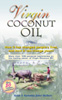
Virgin Coconut Oil
How it has changed people's lives, and how
it can change yours!
References
1. Prior IA, Davidson F, et. al.
"Cholesterol, coconuts, and diet on
Polynesian atolls: a natural experiment: the
Pukapuka and Tokelau island studies."
American Journal of Clinical Nutrition.
1981 Aug;34(8):1552-61.
2. Sircar S, Kansra U. "Choice of cooking
oils--myths and realities." Journal Indian
Medical Association. 1998 Oct;96(10):304-7.
3. Mary G. Enig, Ph.D. “Health and
Nutritional Benefits from Coconut Oil: An
Important Functional Food for the 21st
Century” Presented at the AVOC Lauric Oils
Symposium, Ho Chi Min City, Vietnam, 25
April 1996
4. Mary G. Enig, Ph.D
5. Mary G. Enig, Ph.D
6. Felton CV, Crook D, Davies MJ, Oliver MF.
Wynn Institute for Metabolic Research,
London, UK. “Dietary polyunsaturated fatty
acids and composition of human aortic
plaques.” .Lancet. Oct,1994;
29;344(8931):1195-6.