Increased
lipid peroxidation is shown to be an early cause of
Alzheimer's disease. Liquid vegetable oils, the
polyunsaturates, are highly prone to oxidation and
rancidity, and it is now well known that in the form of
trans fatty acids (through the process of hydrogenation)
they are extremely toxic. (For research on polyunsaturated
oils see:
http://www.coconutoil.com/unsaturated.htm) Coconut oil,
by contrast, is highly saturated and in its natural
unrefined form has a shelf life of more than 2 years, and is
not prone to oxidation.
Dr. Raymond
Peat has talked about the difference between polyunsaturated
oils and saturated oils in their importance for brain tissue
for years now:
Brain
tissue is very rich in complex forms of fats. The
experiment (around 1978) in which pregnant mice were
given diets containing either coconut oil or unsaturated
oil showed that brain development was superior in the
young mice whose mothers ate coconut oil. Because
coconut oil supports thyroid function, and thyroid
governs brain development, including myelination, the
result might simply reflect the difference between
normal and hypothyroid individuals. However, in 1980,
experimenters demonstrated that young rats fed milk
containing soy oil incorporated the oil directly into
their brain cells, and had structurally abnormal brain
cells as a result. Lipid peroxidation occurs during
seizures, and antioxidants such as vitamin E have some
anti-seizure activity. Currently, lipid peroxidation is
being found to be involved in the nerve cell
degeneration of Alzheimer's disease.1
Recent
research on Alzheimer's has begun to look at a ketogenic
diet and its potential benefits. Ketones are high energy
fuel that nourish the brain. Our body can produce ketones
from stored fat while fasting or in starvation, but they can
also be produced by converting medium chain fatty acids in
certain foods. Coconut oil is nature's richest source of
these medium chain triglycerides (MCTs). The high-fat
ketogenic diet has been used for years for certain forms of
childhood epilepsy, and the diet's use is now turning to
Alzheimer's and other diseases as well.
As coconut
oil's use becomes more accepted and widespread, we expect to
see more testimonies in relation to diseases like
Alzheimer's. One of the most widely published reports
recently was from Dr. Mary Newport as reported by the St.
Petersburg Times on October 29, 20082. Dr.
Newport's husband had been diagnosed with early onset
Alzheimer's and was watching her husband quickly
deteriorate. After using drugs that slowed down the effects
of Alzheimer's, she looked into clinical drug trials and
found one based on MCTs that not only slowed the progression
of Alzheimer's, but offered improvement. Not being
able to get her husband into one of these trials, she began
to give him Virgin Coconut Oil, and saw incredible
improvement in his condition.
The
coconut oil he'd ingested seemed to "lift the fog." He
began taking coconut oil every day, and by the fifth
day, there was a tremendous improvement. "He would face
the day bubbly, more like his old self," his wife said.
More than five months later, his tremors have subsided,
the visual disturbances that prevented him from reading
have disappeared, and he has become more social and
interested in those around him.3
Carol Flett came across Dr. Newport's research while
praying for a solution to her husband's worsening
dementia. In her blog post Can God Use Facebook
to Answer Prayers? she reports:
Within three or four hours after giving Bruce the
first couple of tablespoons (of coconut oil) he was
speaking in clear sentences again. He did have one
relapse, shortly after starting, but it lasted only
a day. After that he sprang right back and has been
doing well ever since, taking care of many things
himself that he hadn't been able to do for a long
time. The doctor came to see Bruce yesterday. He was
amazed. He ordered another cognitive test, but he
could see for himself that Bruce was much better. I
told him about the answer to prayer. He believes in
God. He didn't scoff. He just said, "Keep doing what
your doing because it's is working." I believe God
can use whatever method he chooses. If He chooses to
use part of his creation such as coconut oil, I
won't complain, and if He gives direction to His
praying child through Facebook, that is His
prerogative as well.
You can read her blog post here. She has since posted a
video of Bruce thanking people for praying for him, and
explaining how his condition changed dramatically after taking coconut
oil. He reports how he was diagnosed with dementia and could
no longer care for himself, and that the doctors recommended
that he be put in a nursing home. Watch and listen to him
now:
While
coconut oil is certainly NOT a cure all for diseases like
Alzheimer's, coconut oil does offer hope as nature's most abundant
source of MCTs and easily convertible fuel source for ketones. People suffering from Alzheimer's should
immediately start avoiding polyunsaturated forms of oil such
as soy and corn oils, especially if they are hydrogenated
and in the form of trans fatty acids, and a good quality
Virgin Coconut Oil should be added to the diet. Further
studies are needed, and further investigation may indeed
find a strong correlation between diseases such as
Alzheimer's and the rise of industrial vegetable oils after
World War II. Alzheimer's is not a common disease in
tropical cultures where coconut oil and saturated fats are
traditionally consumed.
I started checking into Coconut oil
because I saw on the news that Alzheimers patients were
dramatically improving after taking this oil. I bought some
for my father who had recently been diagnosed and he now
thinks the Alzheimers has gone away! I'm using it too and I
feel so good, physically and MENTALLY better!
Roxie
Was
this article helpful to you? Share it with others:
Find this article and
MORE in the best-selling book:
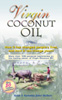
Virgin Coconut Oil
How it has changed people's lives, and how it can change yours!